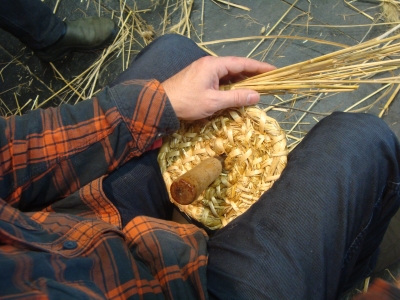
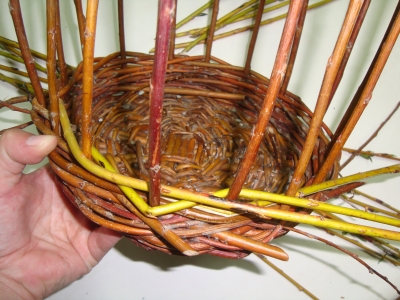
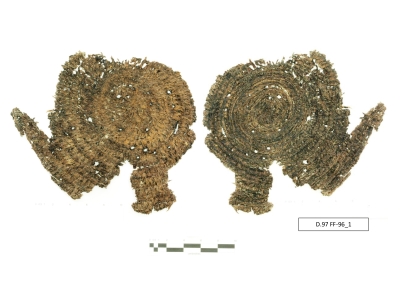
Basketry has a very early origin, already documented in prehistoric contexts, when human communities worked with plant fibers and woody materials to make ropes, baskets, mats, containers and even clothing items. Despite the perishable nature of these materials, the preserved remains show remarkable technical continuity over time, with procedures that recall recent traditional productions. In most cases, complete objects are not preserved, but fragments of baskets and braided or twisted fibers, mineralized remains or impressions on sediments and clays.
All these early testimonies, both from the Paleolithic and Neolithic periods, show characteristics that will be repeated for millennia, such as the use of local fibers and the combination of several techniques to generate flexible but consistent surfaces. Already during the Bronze Age and the Iron Age, basketry will maintain the use of local raw materials, as well as long-standing techniques. The documented functions in these contexts are related to production processes and domestic activities. In the Iberian and Roman periods, these objects will continue to be an essential part of material culture, with applications that range from everyday life to mining contexts.
Overall, the historical journey of basketry highlights an exceptional technical continuity, sustained over time despite the economic and cultural changes of past societies. This persistence not only reflects the effectiveness of technical knowledge, but also the importance of the intergenerational transmission of artisanal knowledge. Therefore, it is necessary to highlight this long historical and technical continuity of basketry, claiming it as a living heritage that connects the first human communities with the artisanal traditions that still endure today.
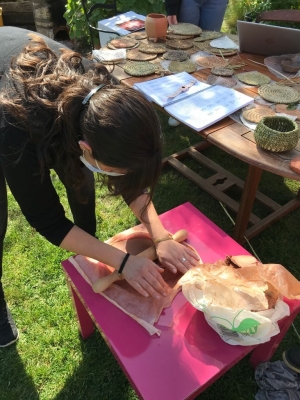
Conference organized within the framework of the celebration of the Night of Museums.